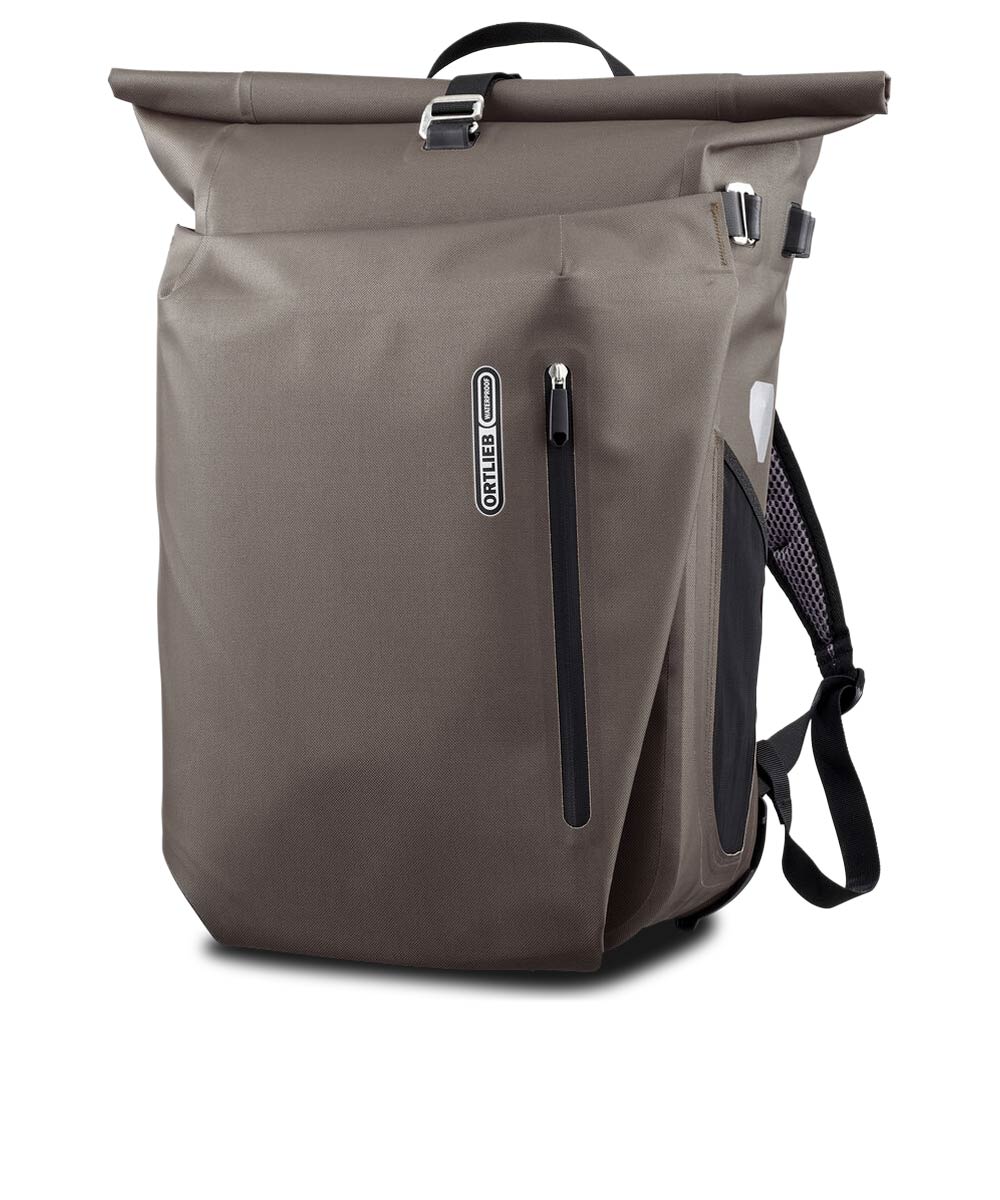
wasserdichte fahrradtasche als rucksack ORTLIEB Fahrradtasche & Rucksack Vario PS online kaufen
SKU: 61270589750
wasserdichte fahrradtasche als rucksack

wasserdichte fahrradtasche als rucksack ORTLIEB Fahrradtasche & Rucksack Vario PS online kaufen

Sale price$22.21 Regular price$24.68
Save 10%

Pay in installments of $6.17 with ShopPay, AfterPay and Klarna

Shipping Estimate
USA
  • USA
  • CAN

Ships within 48 hours · Estimated delivery Jun 28 - Jul 3

Promo Codes Available:

For Your Every Summer RSVP, with Code: SUMMER15

Description

wasserdichte fahrradtasche als rucksack ORTLIEB Fahrradtasche & Rucksack Vario PS online kaufen[short description] 2 in 1: Rucksack und Fahrradtasche einfache Montage mit dem Quick Lock 2. 1 System Volumen ca. 26 Liter + Laptopfach bis 16 Zoll wasserdicht und strapazierfhig ideal fr Uni, Bro und Freizeit Qualitt "Made in Germany" 5 Jahre Herstellergarantie[ short description] [Beschreibung] Fr den Vario PS gilt die Formel 2 fr 1. Das brandneue Produkt aus dem Hause ORTLIEB ist nmlich ein ausgeklgelter Hybrid, d. h. in diesem Fall eine perfekte

[short-description]• 2-in-1: Rucksack und Fahrradtasche
• einfache Montage mit dem Quick-Lock 2.1 System
• Volumen ca. 26 Liter +  Laptopfach bis 16 Zoll
• wasserdicht und strapazierfähig
• ideal für Uni, Büro und Freizeit
• Qualität "Made in Germany"
• 5 Jahre Herstellergarantie[/short-description]

[Beschreibung]

Für den Vario PS gilt die Formel „2 für 1“. Das brandneue Produkt aus dem Hause ORTLIEB ist nämlich ein ausgeklügelter Hybrid, d.h. in diesem Fall eine perfekte Kreuzung aus klassischer Gepäckträgertasche und funktionalem Rucksack. Die Verwandlung von einem zum anderen erfolgt in nur wenigen Sekunden durch eine clevere Innovation und diese besteht aus einer wendbaren Fronttasche. Beide Systeme bieten dir ansonsten, was du von ORTLIEB gewohnt bist: wasserdichtes, robustes und langlebiges Material, das nachhaltig produziert und verarbeitet wird. Und das alles Made in Germany. Mit seinen alltags- und freizeittauglichen 26 Litern Fassungsvermögen macht der Vario PS sowohl an deinem Rad als auch auf deinem Rücken eine super Figur und du wirst ihn bestimmt nie mehr missen wollen.

Technische Details:

  • 2-in-1: Rucksack und Fahrradtasche
  • Wechsel der Funktionen durch umschlagbares Frontflap (180°)
  • schnell zu öffnen und zu schließen durch Rolltop (s.u. „Zusätzliche Information“)
  • einfache Montage durch Quick-Lock2.1-System (s.u. „Zusätzliche Information“)
  • rechts oder links am Gepäckträger fixierbar
  • wasserdichtes, strapazierfähiges Material
  • wasserdicht verschweißte Nähte
  • Volumen ca. 26 Liter
  • Innentasche mit Laptopfach (16")
  • Reißverschlusstasche in der Flap (nicht wasserdicht)
  • seitliche Netztasche
  • belüftetes, komfortables Rückenpolster
  • anatomisch geformte Schultergurte mit Reflexgarn
  • verstellbarer Brustgurt
  • oberer Tragegriff
  • zwei leuchtstarke Reflektoren auf beiden Seiten
  • verstärkter Taschenboden mit Kantenschutz
  • nachhaltig hergestellt in Deutschland
  • hauseigener Reparaturservice
  • 5 Jahre Herstellergarantie

Volumen: 26 Liter

Laptopfach: bis 16 Zoll

Größe: 31 x 47 x 22 cm (B x H x T)

Gewicht: 1550 g

Maximale Zuladung: 9 kg

Material: 100% Nylon mit Polyurethan-Beschichtung (wasserdicht)

Ortlieb Fahrradtasche & Rucksack: 2-in-1-Kombi Vario PS

Rucksack oder Fahrradtasche? Dank des Vario PS musst du dir diese Frage nicht mehr stellen! Das innovative Hybrid-Kombimodell lässt sich als Rucksack und Gepäckträgertasche nutzen, wobei die Umwandlung in wenigen Sekunden vollzogen ist. Einfach die Frontklappe wenden und schon kannst du zwischen Rucksack und Radtasche wechseln.

Bei uns erfährst du, was das Besondere an dem Ortlieb Hybrid-Rucksack ist und welche weiteren Vorteile dich erwarten.

Mit wenigen Handgriffen zur neuen Funktion

Der Vario PS verfügt auf der einen Seite über ein Rucksack-Tragesystem und auf der anderen Seite über eine Fahrradhalterung. Mit einer flexiblen Klappe kannst du innerhalb von Sekunden zwischen diesen beiden Funktionen wechseln: Die Fahrradtasche in einen Rucksack verwandeln und andersherum. Die Klappe wird seitlich und am Boden des Vario PS befestigt und deckt somit entweder die Tragegurte des Rucksacks ab oder die Gepäckträgeraufhängung der Radtasche.

Der Ortlieb Fahrradrucksack für alle Lebenslagen mit 26 l Stauraum

Der Vario PS ist ein echter Allrounder und gehört unserer Erfahrung nach zu den beliebtesten Modellen im Ortlieb-Sortiment. Die 26 Liter Fassungsvermögen sowie das 16 Zoll Laptopfach machen den Rucksack alltags- und freizeittauglich. Egal, ob Schule, Uni oder Büro – der Vario PS von Ortlieb ist stets ein treuer Begleiter. Auch für Freizeitaktivitäten wie Radfahren, Wandern & Co. ist das Modell optimal.

Der Rolltop-Rucksack bietet zudem viel Stauraum: Neben der Innentasche mit dem Laptopfach hast du eine Reißverschlusstasche an der Frontseite sowie zwei seitliche Netztaschen. Dank des wasserdichten Außenmaterials kommt dein Gepäck stets trocken ans Ziel – sowohl im Alltag als auch auf Reisen.

Schwarz, Petrol und Rooibos: Diese Farben stehen zur Wahl

Der Fahrradrucksack ist in drei Farben erhältlich: im klassischen und zeitlosen Schwarz, im modernen und zurückhaltenden Petrol und in Rooibos, einem gedeckten Rotton. Sowohl die Farben als auch das Design sind unisex. Somit ist der Hybrid-Rucksack für jedermann geeignet. Das Modell macht an dem Rad und auf dem Rücken eine tolle Figur und bietet dir maximale Flexibilität.

Im Test: Vorteile der multifunktionalen und wasserdichten Rucksack-Fahrradtaschen-Kombi

Die Rucksack-Fahrradtaschen-Kombi von Ortlieb kann nicht nur mit ihrer „2-in-1 Formel“ überzeugen. Sie wird zudem nachhaltig produziert und bietet dir Qualität „Made in Germany“ mit 5 Jahren Herstellergarantie.

Darüber hinaus kann die Hybrid-Tasche mit ihrem wasserdichten, robusten und langlebigen Material punkten. Das Modell besteht aus 100 % Nylon mit Polyurethan-Beschichtung, wasserdicht verschweißten Nähten und einem verstärkten Taschenboden mit Kantenschutz. Der Vario PS hat ein Gewicht von 1200 g und kann mit bis zu 9 kg belastet werden.

Auch der Tragekomfort ist erstklassig. Beim Rucksack profitierst du von dem belüfteten und komfortablen Rückenpolster sowie den anatomisch geformten Schultergurten, während dich bei der Fahrradtasche ein praktischer Tragegriff erwartet. Des Weiteren ist auch für deine Sicherheit gesorgt: An den Seiten der 2-in-1 Fahrradtasche befinden sich nämlich zwei leuchtstarke Reflektoren.

Tolle Nutzererfahrung: Vario PS mit Quick-Lock QL2.1 und Adapter für leichte Montage am Rad

Durch das Quick-Lock-2.2-System (QL2.2) kann die Fahrradtasche mit nur einer Hand schnell und einfach am Gepäckträger befestigt und wieder gelöst werden. Die Gepäckträgeraufhängung hat einen Rohrdurchmesser von 8 bis 16 mm und kann dank robustem Hakensystem werkzeugfrei am Rad angebracht werden.

Ortlieb Hybrid-Rucksack und tolle Alternativen online kaufen bei Fair Couture

Wozu Rucksack und Fahrradtasche einzeln kaufen, wenn es auch ein Kombi-Produkt als praktische Alternative gibt? Der Vario PS kann dir beides bieten: Einen schicken Rucksack für den Alltag und eine praktische Fahrradtasche für die Freizeit. Mit nur einem Handgriff wird aus dem Rucksack eine Radtasche. Viele unserer Kunden sind von dem Modell überzeugt und geben in ihrer Ortlieb Vario PS Review 5 Sterne. Also worauf wartest Du noch? Schnapp dir den Hybrid-Rucksack in deiner Lieblingsfarbe!

Der Ortlieb Vario PS hat dich noch nicht ganz überzeugt? Dann entdecke auf unserer Webseite viele weitere nachhaltige Alternativen!

FAQ

Was ist das Besondere am Ortlieb Vario PS?

Das Besondere an dem Vario PS ist, dass er als Gepäckträgertasche und Rucksack verwendet werden kann. Mit nur einem Handgriff werden mit einer Klappe entweder die Gepäckträgerhaken oder Rucksackriemen abgedeckt.

Wie groß ist die Taschen-Rucksack-Kombination von Ortlieb?

Der Vario PS ist 31 cm breit, 47 cm hoch und 22 cm tief. Dabei hat die Taschen-Rucksack-Kombi ein Fassungsvermögen von 26 Litern und bietet mit dem gepolsterten Laptopfach bis 16 Zoll genügend Stauraum und Schutz für Laptops, Notebooks und Tablets.

Wie reinige ich die Fahrradtasche richtig?

Bei leichten Verunreinigungen kann das robuste Material mit einem feuchten Tuch gesäubert werden. Anschließend sollte der Vario PS an der Luft trocknen.

[/Beschreibung]

[Zusatzliche]

Größe Laptop: bis 15"

Geschlecht: unisex

Material: 100% Nylon mit Polyurethan-Beschichtung (wasserdicht)

Made in: fair produziert in Germany

Besonderheiten: Mitglied der EOCA (European Outdoor Conservation Association), PVC-frei, Nachhaltigkeit, Klimaschutz, Umweltschutz, Fairtrade, Ressourcen schonen, Reparaturservice, wasserdicht, staubdicht, schmutzdicht

Brand: ORTLIEB, Heilsbronn, Germany

Anlass: Schule, Universität, Büro, Freizeit, Sport, Alltag, Radfahren, Wandern, Commuting

Material: 100% Nylon mit Polyurethan-Beschichtung (wasserdicht)

Rolltop: Zur Erreichung des Schutzgrades IP64 (6=staubdicht, 4=spritzwassergeschützt aus allen Richtungen muss der Verschluss 3-4x eingerollt werden.

Quick-Lock2.2: Das QL2.1-System ermöglicht ein schnelles und unkompliziertes Befestigen und Lösen der Tasche am Gepäckträger mit einer Hand. Die Haken können ohne Werkzeug an den Gepäckträger angepasst werden und decken durch verschiedene Hakeneinsätze Strebendurchmesser von 8 bis 16mm ab. Ein Scheuerschutz im unteren Bereich der Tasche und an der Auflagefläche des Gepäckträgers beugt Abrieb vor.

Lieferumfang: Rucksack-Fahrradtaschen Hybrid mit QL2.1 Tragesystem

Pflegehinweis: Das besonders robuste Material kann bei leichten Verunreinigungen wie Staubanhaftungen mit einem feuchten Tuch gesäubert werden. Nach dem Auswischen die Tasche weit geöffnet an der frischen Luft trocknen lassen.

[/Zusatzliche]


[Versand]

📦 GRATIS Versand ab 35 EUR (Deutschland) | ab 99 EUR (EU)
🚀 Lieferzeit: 1-3 Werktage (DE) | 2-5 Werktage (EU)
♻️ Rückgabe: 30 Tage Rückgaberecht, sofern ungetragen & originalverpackt
🌱 Klimaneutraler Versand mit DHL GoGreen

[/Versand]

Shipping Notes
  • Free Standard Shipping on $100+ Orders to the USA.
  • Except Preorder products are shipped in 48 hours.
  • Delivery to the USA:
  1. Standard Shipping : 3-10 business days
  • If time is of the essence, please consider selecting expedited delivery for faster service.
Exchange/Return Notes
  • We offer a 30-day return/exchange service after receiving.
  • Final sale items are not eligible for returns or exchanges.
  • To process your return/exchange, please contact us at [email protected]
  • Please click here for more details>>> Return & Exchange Policy
SKU: 61270589750

Discover Niche Categories That Outsell wasserdichte fahrradtasche als rucksack

Top-Converting Item to Boost Your Average Order

4.4 ★★★★★
Based on 2458 reviews
Sort
Highest Rating
Newest First
Oldest First
Product Reviews
A
Verified Purchase
Andrew A.
Houston, US
★★★★★ 4
Easy read on Difficult subject
Format: Kindle
This well-documented book explodes the myth of Bretton Woods. The battle between Harry White and John Maynard Keynes turns out to have been contrived.
WAS THIS REVIEW HELPFUL?YesReportShare
Reviewed in the United States on May 30, 2026
E
Verified Purchase
Eric G
Cuba, US
★★★★★ 5
A great book for anyone interested in US foreign policy, history, or economics
Format: Hardcover
In July of 1944 representatives from forty-four nations gathered at the Mount Washington Hotel in Bretton Woods, NH to establish the rules for the post World War II international monetary system. Although nations from around the globe were at the table, the primary debate was between the United States and Great Britain. The U.S. was determined to advance a policy ensuring the dollar reigned supreme in world trade, thus guaranteeing American dominance. The British were holding out for a monetary system that would not relegate them to a secondary status after the war. Representing the two great nations were two men. For the U.S. it was a little-known economist working as an assistant to the Secretary of Treasury, Harry Dexter White, and representing the British was world-known economist John Maynard Keynes. Benn Steil examines the Bretton Woods conference, and the inter-war years leading up to it, using these two men as a backdrop. Not only is the work well researched, but as a senior fellow and director of international economics at the Council on Foreign Relations, Steil is eminently qualified to make economic judgements. Steil’s thoroughness and expertise combine to make an enjoyable read of what could otherwise be an exceptionally dry topic. The main argument Steil makes is that the dominance of dollar in the post WWII economy was a fait accompli at Bretton Woods. Mr. Steil introduces the reader to the relatively unknown Harry Dexter White, a minor player at the U.S. Treasury commanding great influence. Steil shows the reader that going into Bretton Woods, White and his boss, Treasury Secretary Henry Morgenthau, were committed to bringing President Roosevelt’s New Deal to the rest of the world. Part of this plan was to shift power not only from London, but from Wall Street as well, to the U.S. Treasury. White was convinced international banking had played a key role in creating the instability responsible for WWII. A new gold standard tied to the U.S. dollar would ensure stability in White’s view. Ultimately White’s ideas led to the creation of “the three so-called Bretton Woods institutions: the International Monetary Fund (IMF), the World Trade Organization (WTO), and the World Bank” (Steil, The Battle of Bretton Woods, 127). Adding intrigue to economics Steil also shows through declassified F.B.I. documents and recently discovered writings by White, that White was an agent of the Soviet Union. Keynes is often regarded as “the first-ever international celebrity economist” (Steil, The Battle of Bretton Woods, 3). While this may be true, he was no match for the little-known White. White (and Morgenthau) considered the British a threat on the economic stage and made sure their Lend-Lease terms would bankrupt the U.K. by the end of the war and bring them to the bargaining table. As well as being an interesting historical read, and a useful primer on international monetary policy, Steil captures the importance of economic policy in relation to foreign policy. Morgenthau and White realized the power of the U.S. to inflict its will upon other nations was rooted in the power of the dollar. Today as then, U.S. power flows from the economy. Students of modern U.S. foreign policy would be wise to have a basic understanding of U.S. economic policy and how the U.S. economy interacts in the global system.
WAS THIS REVIEW HELPFUL?YesReportShare
Reviewed in the United States on March 2, 2020
E
Verified Purchase
Etienne RP
Charlottesville, US
★★★★★ 5
Hosting Diplomatic Conferences 101: The Case of Bretton Woods
Format: Paperback
Bretton Woods was the most important international gathering since the Paris Peace Conference of 1919. I read this book looking for clues on how to host international conferences: how to accommodate delegates, maintain protocol, overcome obstacles, build consensus, and reach a satisfying outcome. I was disappointed on that count. The Battle of Bretton Woods doesn’t focus on the Bretton Woods conference per se. It is a work of intellectual history built around the two characters of John Maynard Keynes and Harry Dexter White. It describes the way these two Treasury officials negotiated the main financial issues facing the United States and the United Kingdom during World War II and immediately after: the Lend-Lease Act of 1941 granting the British access to war finance and equipment; the blueprints for a postwar monetary order that began circulating in 1942 and ultimately culminated in the adoption of the Articles of Agreement of the International Monetary Fund and the International Bank for Reconstruction and Development at Bretton Woods; the signing of the $4.4 billion Anglo-American Financial Agreement in December 1945; and the inaugural meeting of the IMF board of governors in Savannah, Georgia, on March 8, 1946. It mixes these elements of diplomatic history with personal aspects of the lives of the two main characters: Keynes’s inflated ego and lack of diplomatic acumen that resulted in missed opportunities for Great Britain; and White’s dual personality as the braintrust of the US Treasury and as a mole operating clandestinely for the Soviets. To be sure, there are some useful indications on the Bretton Woods conference itself. It took place in the Mount Washington Hotel in New Hampshire, a luxury resort with striking views of the White Mountains. The organization itself was a mess: “everything is in a state of glorious confusion,” commented British economist Lionel Robbins, who added: “with all their virtues as technicians—and these are very great—the Americans are not good organizers of international conferences.” The conference took place in war time, and army bus and personnel brought the delegates in and out. Delegates were thrown out of the hotel on July 23 for fear they would reopen the discussion and have a closer look at the hastily agreed texts. The location itself owed a lot to domestic politics. US Treasury Secretary Henry Morgenthau wanted to court a local politician for future support of the agreement in the Senate, remembering the disastrous defeat of Wilson’s League of Nations in Congress after World War I. The press was also in attendance, and Bretton Woods became one of the first international conferences to be covered live by the media. Most of the delegates came from Ministries of Finance or central banks, and true diplomats—the ones hailing from Ministries of Foreign Affairs—were a rare occurrence. The US Treasury Department had willingly kept the State Department out of the loop, and considered the only senior diplomat present, Undersecretary of State Dean Acheson, as “one of them”. The conference was only the tip of the iceberg: everything was set in advance, during the two years when plans were circulated and drafts were discussed. The invitations were sent to forty-four nations, but the United States ran the show from start to finish, and even British delegates were relegated to a secondary role. Keynes, who had termed the Reconstruction Bank scheme imagined by White “the work of a lunatic,…some sort of bad joke,” was named chairman of the commission that drafted the Bank’s Articles of Agreement, while White himself dealt with the much more significant IMF. As for other nations, their input was limited to discussing the national quotas that would measure their relative power and influence at the boards of the two institutions or, in the case of the Cubans, to “providing the cigars”. White’s goal was to “channel the energy, aims, ambitions, and vanities of the mass of delegates into meaningless debate.” As an American organizer wily remarked, “there should be just one general rule: that anybody can talk as long as he pleases, provided he doesn’t say anything.” To make things even safer, the session secretaries were all Americans, appointed by White, and it was they who wrote the official minutes of the committees. Some important remarks made during sessions disappeared from the draft minutes, while crucial provisions were introduced surreptitiously in the final text versions. As an example, White’s technicians strategically replaced “gold” with “gold and dollars” in the paper describing the foundations of the postwar monetary order, a crucial modification that Keynes discovered only after his departure from Bretton Woods. The result was, in Keynes’s words, “the most monstrous monkey-house assembled for years.” The distinguished Cambridge don liked that expression, and indeed often referred to non-Anglo-saxons as monkeys, with a special mention to the French which he utterly despised. But the monkey-king in this diplomatic jungle was certainly Keynes himself. Long before Paul Krugman and Thomas Piketty, Keynes was the first-ever international celebrity economist. He was surrounded by an aura of awe and admiration, and the printed media craved for his every declarations. In Benn Steil’s rendering, he had “an effortless facility with words that might have made him a master diplomat, had he actually been more concerned with convincing opponents than with cornering them logically and humiliating them.” “The man is a menace for international relations,” remarked fellow British economist James Meade, who nonetheless revered him. He would make aggressive jokes on lawyers in front of American lawyers, show his contempt for other delegates by displaying his immense intellectual superiority, and try to steal the show by pretending the outcomes of negotiations were all due to his influence while in fact they ran counter to his prescriptions. His last speech in Savannah, where he metaphorically summoned spirits and fairies to bestow the newborn institutions with their gifts, was taken as a personal attack by the American delegate: “I do mind being called a fairy,” he muttered to his aide. If a statesman is to be judged by his capacity to serve the national interest, Keynes failed miserably in his attempt at statesmanship. This is not to say that he didn’t have Britain’s interest in mind. His visionary monetary schemes notwithstanding, he had ultimately come to the United States with the mission of conserving what he could of bankrupt Britain’s historic imperial prerogatives. As Schumpeter wrote, “Keynes’s advice was in the first instance always English advice, born of English problems.” Keynes was thoroughly British, and it was the British problems of his day that drove his theorizing: problems of deflation and depression, paying for war and surviving the perilous transition to peace. He had spent his career thinking about monetary issues as a way to preserve his country’s clout in the world. In particular, the shift of financial power from London to New York was a matter of constant concern for him. But he lacked the basic insight that the Americans did not share British national interests, and that they could even be rival powers on the international scene. Throughout the war, Keynes continuously overestimated American sympathies with Britain and underestimated the importance of public and congressional resistance to US aid or involvement. He thought of Bretton Woods as a battle of ideas, counting on his immense intellectual superiority to carry the day, whereas it was first and foremost a battle of power and influence, with the United States as the clear winner. Indeed, British and American interests were not identical, however much both peoples were dedicated to destroying Nazism. Henry White had a clear goal in Bretton Woods: to entrench the dollar as the world’s currency, and to make it “as good as gold”. He used the leverage provided by the Lend-Lease agreement and Britain’s quasi-bankrupt situation in order to put a permanent end to the pound sterling’s international role. This required dismantling the structural supports of the British empire. In particular, Americans sought to put an end to “imperial preference”, by which Britain secured privileged trade access to the markets of its colonies and dominions. There was no room in the new order for the remnants of British imperial glory: the postwar world needed to be grounded in nondiscriminatory multilateral trade and full monetary convertibility. The Americans never deviated from their hard-line geopolitical terms. Many held no particular sympathy for the British, who had “shamefully walked away from their Great War debt obligations,” and who were trying to extend their Empire’s lease of life by credit. At Bretton Woods, we see American power in full swing, and in particular the role of the US Treasury as the economic arm of American foreign policy. Contrary to the myth, Bretton Woods did not provide the economic foundation for postwar prosperity and monetary stability. And it was not the cooperative, disinterested, forward-looking endeavor that people often have in mind when they stress the need for a new Bretton Woods. The Bretton Woods system didn’t work the way it was supposed to. It was effective for only a brief period, and then not for the reason its authors had envisaged. It was not until 1961, fifteen years after the IMF was inaugurated, that the first nine European countries formally adopted the required provisions that their currencies be convertible into dollars. Even then, Bretton Woods was an ineffective and crisis-prone monetary system. It began experiencing potentially fatal difficulties as early as the late 1950s, and was only kept alive by a series of political fixes that made little long-term, macroeconomic sense. It could never have survived the globalization of finance and the removal of capital controls that began to take place in the 1970s. Indeed, it can be argued that the system was doomed the moment that it came into existence, and that the Bretton Woods agreements contained fatal flaws that could only lead to the abandon of gold convertibility. Not only was Bretton Woods a crisis-prone, unstable system: it was also a bad deal for Great Britain and, one could argue, for the United States and for the world as well. What Britain actually needed in 1944-45 was short-term financing at reasonable cost with few geopolitical strings attached, and possibly a lower exchange rate. There was evident hubris in the attempt to design a global monetary system, to be managed by an international body, at a time when the outcome of the war was not yet clear. Keynes and White’s ambition was to create “a New Deal for a new world,” but they lacked the political legitimacy and also the effective means to achieve such a grand plan. Another course of action was possible for the United Kingdom, one suggested by a British Treasury official after the facts: postpone the “Grand Design” negotiations, avoid irreversible decisions, try to buy time until you see how the new postwar world develops, and borrow your way out of the crisis by getting a commercial loan from Wall Street. Who at Bretton Woods would have thought that the British empire would unravel, the United States and the Soviet Union turn into arch-enemies, and the world divide into hostile camps just two years after the conference? There was no necessity to conclude Bretton Woods in a haste. Waiting for the San Francisco conference to address the issue of money and finance jointly with the creation of the United Nations would have made the postwar institutional framework more coherent. The world would have avoided the dichotomy between the Bretton Woods institutions in Washington and the United Nations in New York, in which both seem to live on completely different planes. So are there practical lessons from Bretton Woods for statesmen and diplomats hosting international meetings, such as the Paris Conference on Climate Change that will take place in end-November and December 2015? First, as the previous attempt to tackle climate change at Copenhagen taught us, the summit itself is not the place where comprehensive negotiations should take place. Most items on the agenda should be solved beforehand, in preparatory meetings among experts or in a pre-summit rehearsal such as the UN General Assembly in New York. Second, organizers should make sure they keep a bone for the leaders and national delegates to chew, one that is easy enough to grasp and with a clear payoff in terms of national interest, such as the quota issue at Bretton Woods. Managing expectations and egos will always be a tricky issue, but one that diplomats are best equipped to handle. How to deal with the media is also a key issue, particularly in our age of instant communication and world broadcasting. Lastly, a modicum of modesty should be in order: the world is not going to be saved by international conferences, however successful they turn out to be. For Britain in 1944 and for the planet as a whole in 2015, buying time is always a sensible option.
WAS THIS REVIEW HELPFUL?YesReportShare
Reviewed in the United States on September 10, 2015
A
Verified Purchase
active reader
Boise, US
★★★★★ 3
History worth reading
Format: Kindle
Presents the history of the Bretton Woods conference, creation of the World Bank and the IMF and global and US politics surrounding the events. Discussion of Harry Dexter White, key US representative at Bretton Woods focuses on claims he was a Soviet spy beginning in the late 1930s and continuing through the conference and into the late 1940s; spends more time than necessary on this even though it is not clear how this affected the outcome of the conference. Most of the discussion of Keynes is on his reputation rather than his economics. Not the definitive history of Bretton Woods.
WAS THIS REVIEW HELPFUL?YesReportShare
Reviewed in the United States on July 10, 2013
J
Verified Purchase
John Hemphill
Lake Worth, US
★★★★★ 4
Foes at the Top Table
Format: Kindle
Those of us who studied economics in the 60s grew up on Keynes. This book provides a fascinating picture of the great man in action. And an equally fascinating picture of the Lend Lease negotiations and then the US hard line at Bretton Woods. Behind this hard line was Harry Woods, of Lithuanian emigre stock, who clawed his way by hard work and intelligence to negotiating prominence in the US Treasury. And who was a Soviet agent of influence. Well written, lucid, and remarkably interesting.
WAS THIS REVIEW HELPFUL?YesReportShare
Reviewed in the United States on May 19, 2013

recommand products